Skip to main content
Choosing the right Office Table can make a major difference in how employees work, collaborate, organize documents, and use available office space. A suitable table should provide enough working surface, support comfortable posture, match the room layout, and complement the overall office design. For businesses in Manila and Quezon City, the choice also depends on office size, team structure, budget, durability, and the type of work being performed.
A well-planned office table is more than a piece of furniture. It becomes part of the daily work environment and can influence productivity, organization, comfort, and the professional appearance of a workplace. Whether you are furnishing a startup, corporate office, school, hospital, government facility, or home-based business, selecting the right table requires careful consideration.
Why the Right Office Table Matters
Employees spend many hours working at desks, so the table should support everyday activities without creating unnecessary limitations. A poorly sized table can make a workspace feel crowded, while an oversized table may waste valuable floor space.
The right office table provides sufficient room for computers, monitors, documents, stationery, and other essential equipment. It should also leave enough space for employees to move comfortably around the workstation.
For businesses, furniture selection can also affect the appearance of the workplace. A consistent furniture layout creates a more organized environment for employees and visitors. This is particularly important for reception areas, executive offices, meeting rooms, and client-facing workplaces.
Types of Office Tables for Different Workspaces
Different departments and working styles require different table configurations. Understanding the available options makes it easier to select furniture based on practical needs rather than appearance alone.
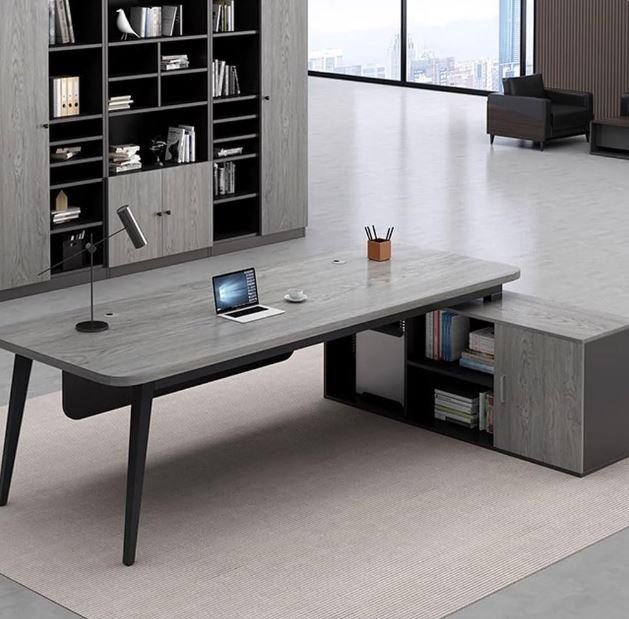
A standard rectangular office table is suitable for individual workstations and general administrative tasks. Its straightforward design works well in both small offices and larger corporate environments.
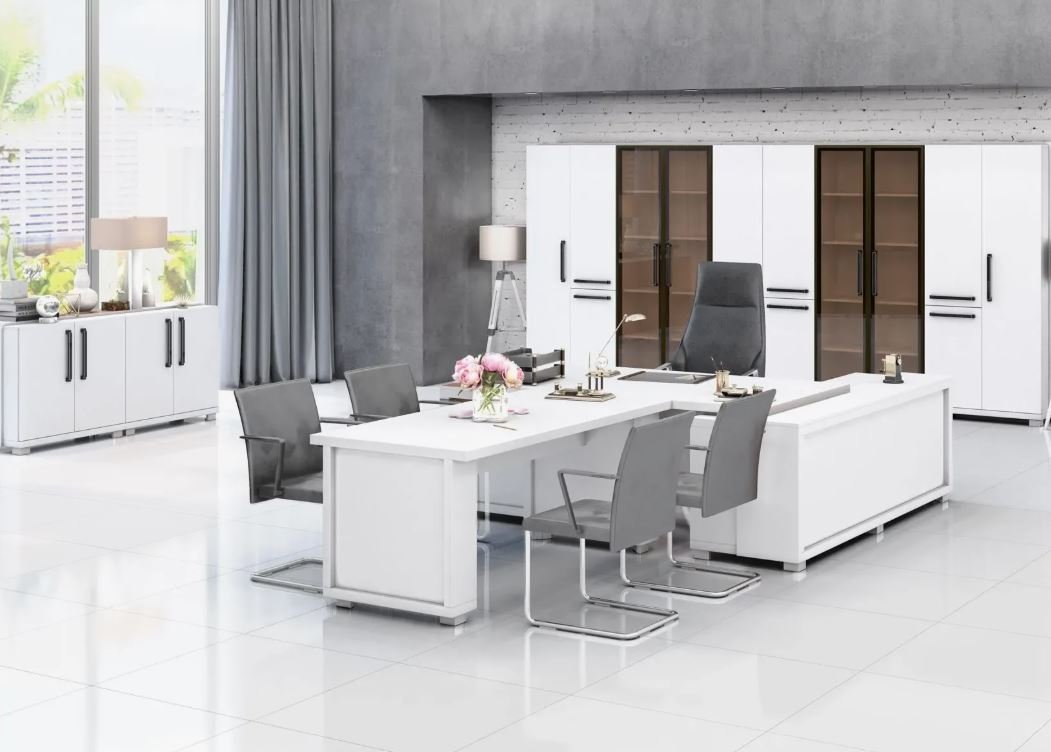
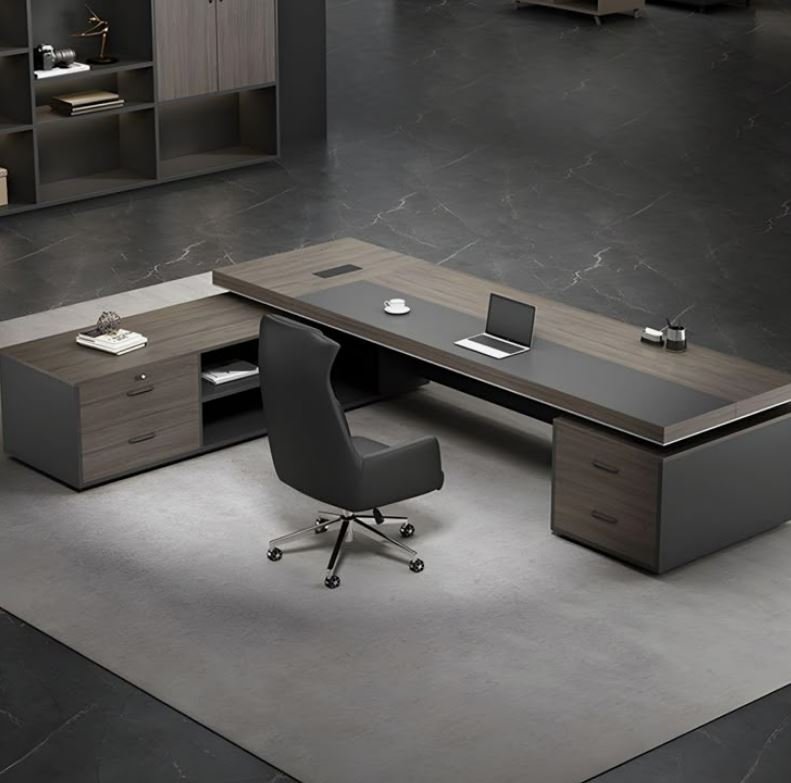
Executive tables usually provide a larger working surface and a more substantial appearance. They can be appropriate for private offices used by managers, directors, and business owners.
Meeting tables are designed for group discussions, presentations, interviews, and team meetings. Depending on the available space, businesses can choose rectangular, round, square, or modular configurations.
Workstation tables are useful when several employees need to work within the same area. They can be arranged in clusters or linear layouts to make better use of available floor space.
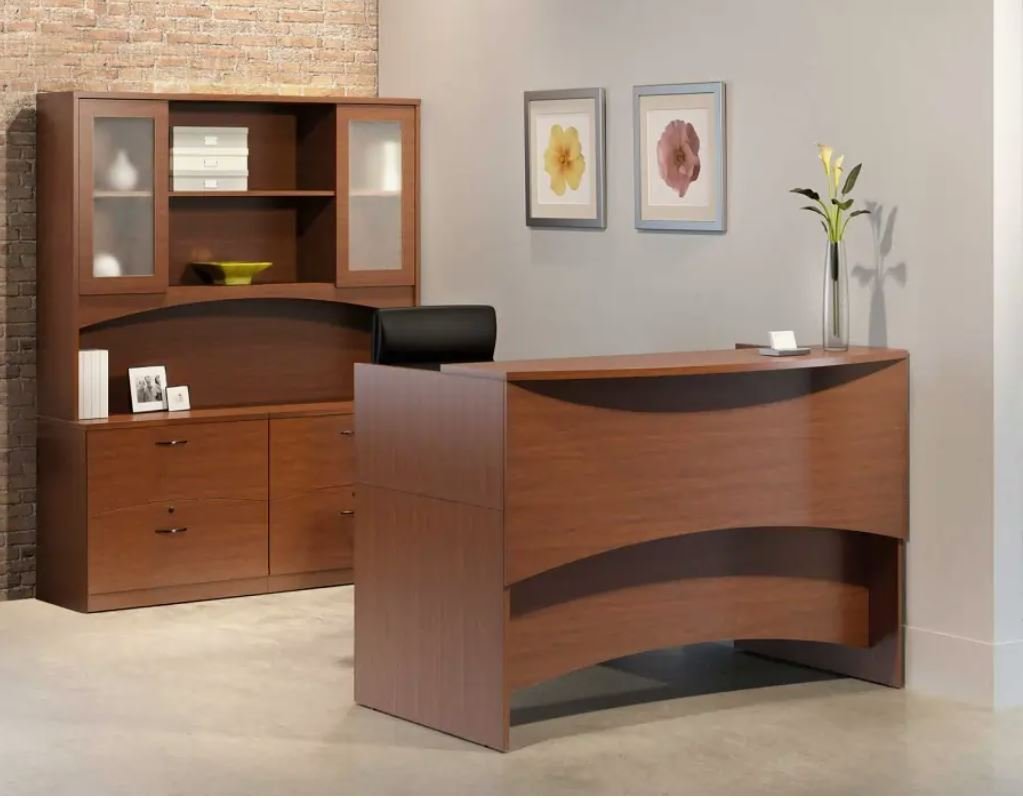
Reception tables and counters are designed specifically for front-desk environments. They should provide sufficient room for computers, documents, visitor management, and other administrative tasks while maintaining a welcoming appearance.
How to Choose an Office Table for Your Business
Before purchasing furniture, measure the available room carefully. Consider the wall dimensions, doors, windows, walkways, electrical outlets, storage cabinets, and other furniture.
The table should fit comfortably without blocking movement. Employees should have enough room to sit, stand, access drawers, and move around the workstation.
Think about the equipment that will be placed on the table. A single laptop requires considerably less space than a workstation containing two monitors, a printer, documents, and office accessories.
You should also consider the number of employees. A growing company may benefit from modular office furniture that can be rearranged as teams expand or departments change.
Office Table Size and Workspace Planning
Size is one of the most important factors when choosing office furniture. A table that is too small can quickly become cluttered, while a table that is too large can reduce usable floor space.
Start by identifying the activities performed at each workstation. Employees who mainly use laptops may need less surface area than graphic designers, architects, accountants, or staff who regularly handle physical documents.
Workspace planning should also include sufficient clearance around furniture. Walkways should remain accessible, and frequently used storage areas should not be blocked by desks or tables.
For offices in Manila and Quezon City, where commercial spaces can vary significantly in size and layout, careful planning can help businesses make better use of every available square meter.
Choosing Materials for an Office Table
The material affects durability, maintenance, appearance, and overall value.
Engineered wood and laminated surfaces are commonly selected for office environments because they can offer a practical combination of appearance and easy maintenance. Metal components can provide additional structural support, particularly in tables designed for heavy or frequent use.
Glass surfaces can create a contemporary appearance but may require more frequent cleaning to maintain a professional look. Solid wood can provide a distinctive appearance and strong construction, although the cost and maintenance requirements may differ.
When comparing materials, consider how frequently the table will be used, the type of equipment placed on it, cleaning requirements, and the expected service life.
Ergonomics and Employee Comfort
Office furniture should support comfortable working habits. The relationship between the table, office chair, computer monitor, keyboard, and employee should be considered as one complete workstation.
A suitable table height allows employees to work without excessive strain on their shoulders and arms. There should also be enough legroom beneath the surface.
Monitor placement matters as well. Employees should be able to position screens at a comfortable viewing distance and height. Cable management can further improve the workspace by reducing clutter and preventing cables from becoming obstacles.
Ergonomic planning is especially important when employees spend most of their working day at their desks.
Office Table Design for Modern Workplaces
Modern offices often require furniture that supports multiple working styles. Employees may move between individual tasks, meetings, collaborative projects, and informal discussions throughout the day.
Modular tables can provide flexibility because they can be rearranged when team structures change. Compact tables may be useful for smaller offices, while larger configurations can support departments that require shared working areas.
The best design is not necessarily the most fashionable option. It should support the actual workflow of the organization while maintaining a professional and consistent appearance.
Office Tables for Manila and Quezon City Businesses
Businesses in Manila and Quezon City have diverse office requirements, ranging from compact commercial spaces to large corporate facilities. Furniture should therefore be selected according to the specific environment rather than using a single solution for every business.
Startups may prioritize flexible and space-efficient furniture. Established companies may require larger workstation systems for multiple departments. Schools and training centers may need durable tables that can accommodate frequent use, while hospitals and administrative facilities may require furniture designed around specialized workflows.
Local businesses should also consider delivery, installation, customization, replacement parts, and after-sales support when selecting an office furniture supplier.
Why Custom Office Furniture Can Be Useful
Standard furniture works well for many workplaces, but some offices have unusual layouts or specific requirements. Custom office tables can be designed around available dimensions, employee numbers, storage requirements, and workplace functions.
Customization may be useful when a room has limited floor space or when a business wants a consistent furniture system across several departments.
Before ordering customized furniture, confirm the dimensions, materials, finishes, cable requirements, storage needs, and installation process. A detailed plan can reduce the possibility of costly adjustments later.
Office Table and Storage Planning
A table should not be considered separately from storage. Employees need convenient access to documents, stationery, equipment, and personal items.
Pedestals, filing cabinets, shelves, and storage units can be positioned near workstations without interfering with movement. Good storage planning also helps keep work surfaces clear.
For offices with limited space, integrated or under-desk storage can be particularly useful. However, storage should never compromise legroom or employee comfort.
How Businesses Can Get Better Value From Office Furniture
The cheapest table is not always the most economical choice. Businesses should consider durability, maintenance, warranty coverage, replacement options, and expected lifespan.
A durable table that remains functional for years may provide better long-term value than a low-cost product that needs frequent replacement.
Businesses should also purchase according to actual requirements. Buying oversized furniture for a small workspace can reduce efficiency, while choosing undersized tables may create problems when equipment or staffing levels increase.
Office Furniture Express for Workplace Furniture Solutions
Businesses looking for office furniture can work with Office Furniture Express to evaluate furniture options according to workspace requirements, layout, and professional needs. The right supplier can help businesses compare table styles, sizes, materials, and configurations rather than simply selecting furniture based on appearance.
For companies furnishing offices in Manila or Quezon City, discussing the floor plan and intended use before purchasing can make the selection process more efficient.
Common Mistakes When Buying an Office Table
One common mistake is choosing a table based only on its appearance. A visually attractive table may not provide enough workspace or storage for everyday activities.
Another mistake is ignoring measurements. Furniture should always be checked against the room dimensions before purchase.
Businesses can also overlook cable management, legroom, chair compatibility, and future expansion. These details may seem minor initially but can significantly affect everyday usability.
Finally, choosing furniture without considering the work performed at the station can result in an inefficient setup. The table should support the employee’s actual responsibilities.
Office Table Buying Checklist
Before making a purchase, consider the available room size, number of users, equipment requirements, table dimensions, material, durability, storage, cable management, maintenance, and budget.
It is also useful to consider future growth. If the business expects to add employees or reorganize departments, flexible furniture may provide greater long-term value.
For larger projects, prepare a complete furniture layout before ordering. This helps determine how many tables are required and where each workstation should be positioned.
Frequently Asked Questions
What is the best Office Table for a small office?
A compact rectangular or modular table can work well in a small office because it provides practical workspace without occupying excessive floor area.
How high should an Office Table be?
A typical office table is designed around standard desk-chair ergonomics, but the ideal height depends on the employee, chair, equipment, and workstation setup.
Which material is best for office tables?
The best material depends on the intended use, budget, maintenance requirements, and desired appearance. Laminated engineered surfaces and durable metal components are common practical choices.
Should I choose custom or standard office tables?
Standard tables are suitable for many workplaces, while custom furniture can be beneficial when a room has unusual dimensions or specific functional requirements.
How do I choose tables for a large office?
Start with the employee count, department requirements, room dimensions, workflow, storage needs, and future expansion plans. A detailed floor plan can help create an efficient furniture layout.
Can office tables improve workplace productivity?
Well-planned furniture can support organization, comfortable working positions, efficient movement, and easier access to equipment, all of which can contribute to a better working environment.
Final Thoughts
Choosing an Office Table should involve more than comparing designs and prices. Businesses should consider workspace dimensions, employee comfort, daily activities, equipment, storage, durability, and future growth before making a decision.
For organizations in Manila and Quezon City, a well-planned furniture setup can make better use of commercial space while creating a professional environment for employees and visitors. Whether you need individual workstations, executive tables, meeting furniture, or customized solutions, selecting furniture based on real workplace requirements provides stronger long-term value.
A practical approach is to assess your space first, identify your team’s needs, compare suitable options, and request professional guidance before placing a large furniture order. Office Furniture Express can be considered when exploring office furniture solutions designed around the needs of modern Philippine workplaces.