Skip to main content
A well-designed workplace can influence how employees work, collaborate, and interact with clients. Professional Office Furniture plays an important role in creating an organized environment that supports comfort, productivity, and a polished business image. In Manila and Quezon City, where offices range from compact startups to large corporate facilities, choosing furniture that matches the available space, workflow, and business requirements can make a significant difference.
Office furniture is no longer limited to desks and chairs. Modern workplaces may require executive desks, ergonomic office chairs, workstations, conference tables, reception counters, filing cabinets, storage units, and collaborative furniture. The right combination helps businesses create a functional workplace while maintaining a consistent professional appearance.
Why Professional Office Furniture Matters
Office furniture affects more than the appearance of a workplace. Employees spend many hours at their desks, so furniture should support comfortable working positions and efficient movement. A poorly planned workspace can create clutter, reduce usable space, and make everyday tasks less convenient.
Professional furniture can help establish clear work zones. Individual workstations can support focused tasks, while meeting tables provide dedicated areas for discussions. Reception furniture creates an immediate impression for visitors, and suitable storage keeps documents and supplies organized.
For Philippine businesses, practical furniture selection is especially important because office spaces can vary considerably. Some companies operate in large commercial buildings, while others use smaller spaces where every square meter matters. Furniture should therefore be selected according to the actual dimensions and workflow of the office rather than appearance alone.
How to Choose Furniture for a Professional Office
The first step is to understand how the workplace will be used. Consider the number of employees, their daily responsibilities, available floor area, storage requirements, meeting frequency, and opportunities for future expansion.
A finance department may need generous desk space and document storage, while a creative team may benefit from collaborative tables and flexible workstations. An executive office may require a larger desk and meeting area, whereas a compact startup may prioritize modular furniture that can be rearranged as the company grows.
Measurements should also be taken before purchasing. Desk dimensions, chair clearance, walking paths, cabinet doors, and meeting areas all need sufficient space. A visually attractive desk may not be the right choice if it makes movement difficult.
Essential Office Furniture for Different Work Areas
A professional office usually consists of several functional areas, and each area requires different furniture.
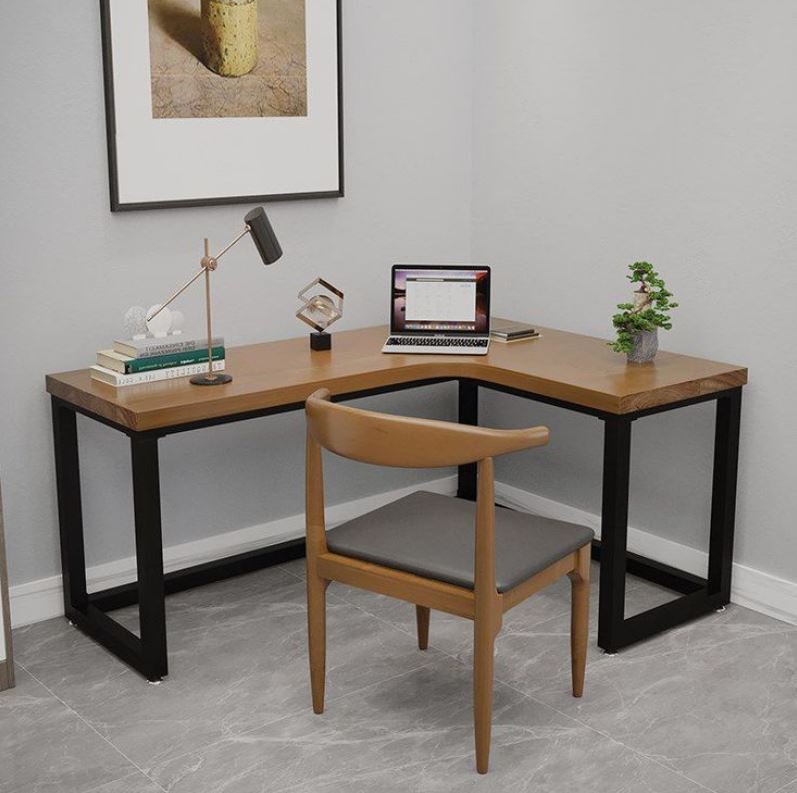
Workstations are useful for employees who need dedicated individual spaces while still working within a shared environment. They can help organize teams and make efficient use of available floor space.
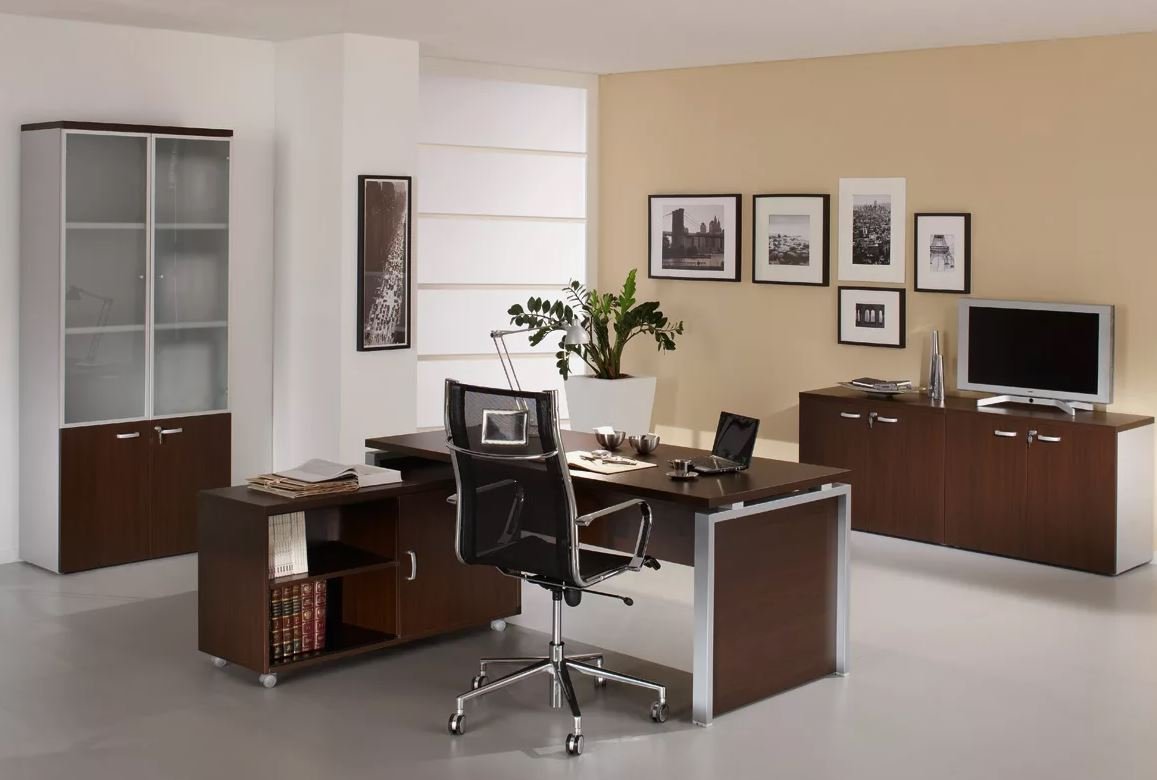
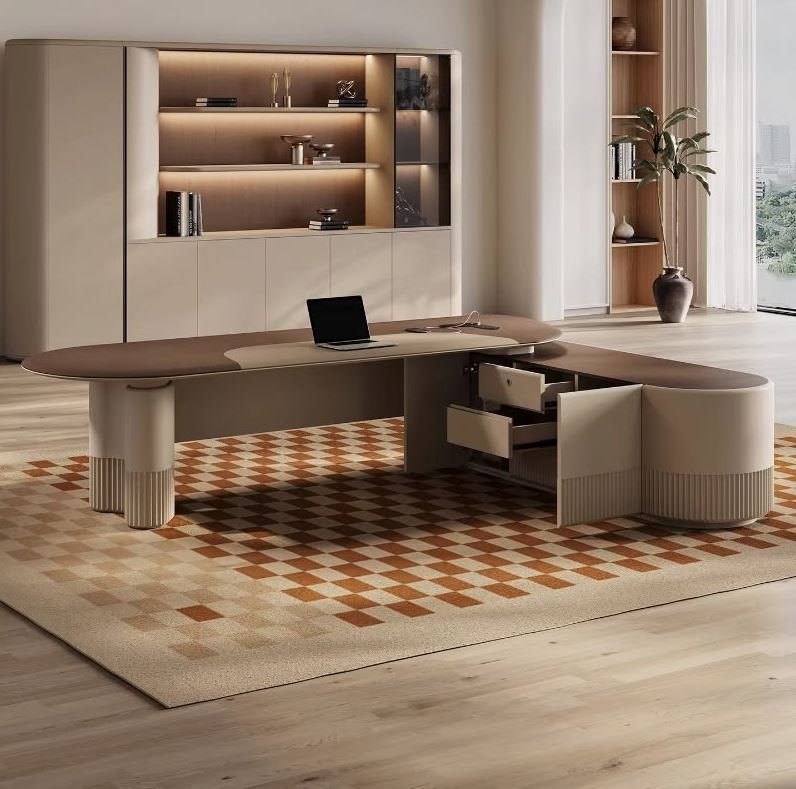
Executive desks are generally suited to private offices and management areas. Depending on the room, an executive setup may include a desk, Professional Office Furniture, side storage, credenza, and a small meeting table.
Conference rooms require furniture that supports communication. A properly sized conference table combined with comfortable chairs can make meetings more productive and welcoming.
Reception areas need special attention because they are often the first point of contact for visitors. A reception counter, seating, side tables, and suitable storage can create an organized entrance without overcrowding the space.
Storage furniture is equally important. Filing cabinets, pedestals, cupboards, and other storage solutions help employees keep documents and supplies accessible while maintaining a clean workplace.
Ergonomics Should Be Part of the Buying Decision
Comfort should never be treated as an optional feature when selecting office furniture. Employees may spend several hours working at desks, making ergonomic considerations important.
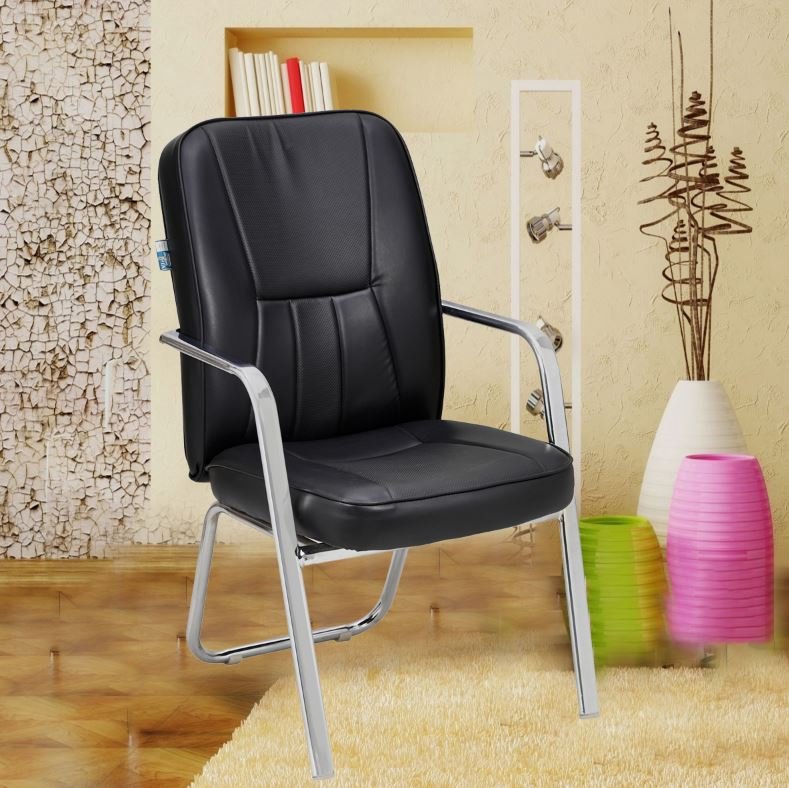
An office chair should provide suitable back support, comfortable seating, and adjustable features where appropriate. Desk height should work well with the chair and the employee’s working position. Computer monitors should also be positioned to reduce unnecessary neck and eye strain.
An ergonomic setup is not created by purchasing a chair alone. Desk dimensions, chair adjustment, monitor position, keyboard placement, lighting, and employee posture all contribute to the overall workstation.
Businesses planning a large furniture purchase can also consider different employee needs. Adjustable furniture may provide greater flexibility across teams, particularly when multiple employees use shared workstations.
Professional Office Furniture for Small Offices
Small offices require careful planning because furniture can quickly consume valuable floor space. Instead of filling the room with oversized desks, businesses can select compact workstations, mobile storage, vertical cabinets, and appropriately sized meeting tables.
Modular furniture can be particularly useful because layouts may be changed as teams expand or departments move. Mobile pedestals can provide personal storage without permanently occupying a large footprint.
The objective should not be to fit as much furniture as possible into a room. The goal is to create a workspace where employees can work comfortably while maintaining clear circulation and useful shared areas.
Office Furniture for Corporate Workspaces
Corporate offices often need furniture that supports different departments and workplace activities. A large office may include executive areas, open workstations, private offices, meeting rooms, collaboration zones, reception spaces, and storage areas.
Consistency can help create a cohesive corporate environment. Matching finishes, complementary workstation designs, and coordinated seating can make separate departments feel like part of the same organization.
At the same time, different departments may require different configurations. Procurement teams should therefore consider furniture standards that maintain visual consistency without forcing every workspace into exactly the same layout.
Choosing Office Furniture for Startups
Startups often experience rapid changes in employee numbers and working arrangements. Furniture that can adapt to those changes may provide better long-term value than highly fixed solutions.
Modular desks, shared workstations, movable storage, and flexible meeting furniture can make it easier to modify the workplace. Businesses should also consider durability because furniture may need to accommodate changing teams and heavier daily use.
Budget is another important consideration. Instead of choosing furniture based solely on the lowest purchase price, businesses should consider construction quality, usability, maintenance, warranty coverage, and expected service life.
Manila and Quezon City Office Furniture Considerations
Businesses searching for office furniture in Manila or Quezon City should consider more than product appearance. Local availability, delivery arrangements, installation, space planning, after-sales support, and project requirements can all affect the purchasing process.
Companies moving into a new office may benefit from discussing their floor plan with an experienced office furniture supplier before finalizing purchases. This can help identify suitable workstation configurations, storage requirements, circulation areas, and furniture quantities.
For larger projects, procurement teams should also establish clear specifications before requesting quotations. Comparing suppliers using the same requirements makes it easier to evaluate pricing, materials, dimensions, delivery arrangements, and included services.
How to Create a More Productive Workspace
Furniture should support the way employees actually work. Start by identifying activities that take place throughout a normal business day. Individual tasks, phone calls, team discussions, presentations, informal collaboration, and administrative work may each require different environments.
Lighting and furniture placement should also work together. Desks should not be positioned in ways that create unnecessary screen glare, while frequently used storage should remain accessible.
Noise and privacy are additional considerations in open offices. Workstation screens, strategic furniture placement, private meeting rooms, and designated collaboration areas can help create a better balance between communication and concentration.
Common Mistakes When Buying Office Furniture
One common mistake is choosing furniture based entirely on appearance. A desk may look impressive in a showroom but may not suit the dimensions or workflow of a particular office.
Another mistake is ignoring storage. Without enough storage capacity, desks can become cluttered and important documents or supplies may be difficult to locate.
Buying identical furniture for every department can also create problems. Different teams often have different requirements, so workplace planning should account for actual job functions.
Businesses should also avoid purchasing furniture without measuring the space. Doorways, elevators, columns, electrical outlets, windows, and existing fixtures can affect installation and layout.
Finally, focusing only on initial price can lead to higher costs later. Durability, maintenance, replacement requirements, and usability should all be considered when evaluating overall value.
What to Look for in an Office Furniture Supplier
A reliable supplier should be able to discuss more than individual products. Businesses may need assistance with product selection, space planning, furniture combinations, delivery, installation, and project coordination.
Ask about materials, dimensions, available finishes, warranty terms, lead times, installation requirements, and after-sales support. For larger projects, requesting a detailed quotation can make costs and inclusions easier to compare.
It can also be useful to visit a showroom when possible. Seeing furniture in person allows buyers to evaluate dimensions, finishes, seating comfort, construction, and overall quality before making a significant investment.
Professional Office Furniture and Long-Term Business Value
Office furniture is a long-term workplace investment. Good furniture should continue supporting employees after the initial excitement of a new office has passed.
Businesses should think about how their workforce may change over the next few years. A growing company may require additional desks, storage, meeting spaces, and seating. Selecting furniture systems that can accommodate expansion can reduce the need for a complete replacement.
Maintenance should also be considered. Surfaces that are easy to clean and furniture components that can be repaired or replaced may provide better long-term practicality.
Questions to Ask Before Purchasing Office Furniture
How much office furniture does a business need?
The quantity depends on employee numbers, workspace dimensions, work patterns, meeting requirements, storage needs, and future expansion plans.
What type of office chair is suitable for long working hours?
Look for a chair that provides appropriate back support, comfortable seating, and useful adjustments for the employee and workstation.
Is modular office furniture suitable for startups?
Yes. Modular furniture can provide flexibility when employee numbers, teams, or office layouts change.
Should businesses visit a furniture showroom?
If possible, yes. A showroom visit can help buyers assess furniture quality, dimensions, finishes, and comfort before ordering.
How can companies choose furniture for a small office?
Measure the available space first, prioritize essential functions, maintain clear walkways, and consider compact or modular furniture solutions.
What should be included in an office furniture quotation?
A quotation should clearly identify products, quantities, specifications, finishes, pricing, delivery terms, installation, warranty information, and other applicable charges.
Building a Better Office Furniture Plan
The best office furniture strategy starts with the workplace rather than individual products. Determine what employees need, measure the available area, establish functional zones, and then select furniture that supports those requirements.
Businesses in Manila and Quezon City can also compare suppliers based on product range, customization options, project support, delivery capability, installation services, and after-sales assistance. This approach can make the purchasing process more structured and reduce the risk of selecting furniture that does not suit the workplace.
For companies planning a new office, renovation, expansion, or departmental upgrade, working with an experienced supplier can make furniture selection easier. Office Furniture Express can be considered when businesses are evaluating office furniture solutions for professional work environments.