Skip to main content
Choosing the right office furniture is about much more than filling an empty room. A well-planned workspace should support productivity, comfort, collaboration, organization, and the overall identity of a business. With changing workplace needs across Manila and Quezon City, companies are increasingly looking for practical furniture that also creates a professional and welcoming environment.
The growing interest in Furniture Designs Philippines reflects this shift toward office interiors that combine functionality with contemporary aesthetics. From executive desks and ergonomic chairs to modular workstations, reception counters, conference tables, and storage solutions, businesses now have many options for creating offices that match their space and working style.
Understanding Modern Office Furniture Designs
Modern office furniture focuses on simplicity, usability, durability, and efficient space planning. Instead of choosing individual pieces without considering the overall layout, businesses can create a coordinated workspace where desks, chairs, storage units, meeting areas, and reception furniture work together.
For offices in the Philippines, furniture selection should also consider the available floor area, number of employees, type of work, climate, maintenance requirements, and expected usage. A startup with a compact office may benefit from modular workstations, while a large corporate office may require structured benching systems, private executive rooms, meeting tables, and dedicated collaboration areas.
The best furniture design is therefore not necessarily the most expensive or visually striking option. It is the design that provides the right balance between appearance, comfort, durability, and functionality.
Popular Furniture Designs Philippines Businesses Can Consider
Office interiors continue to evolve as companies adopt more flexible approaches to workplace planning. Several furniture styles are particularly useful for Philippine businesses.
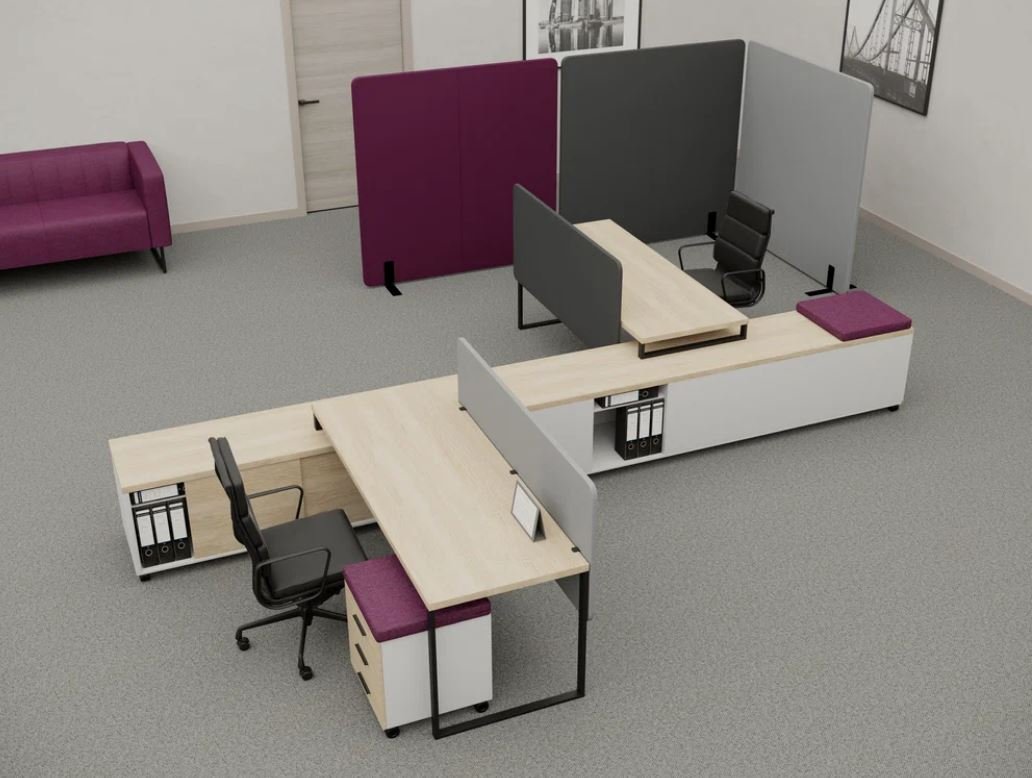
Open workstation systems are suitable for teams that communicate frequently. They can accommodate multiple employees while making efficient use of floor space. Partition panels can provide a degree of privacy without completely separating workers from their colleagues.
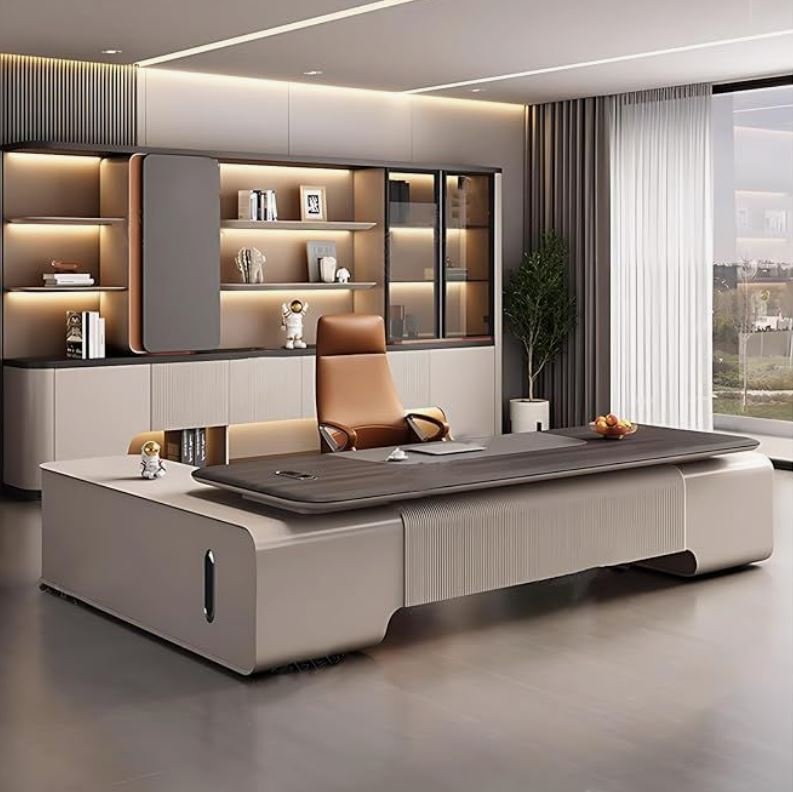
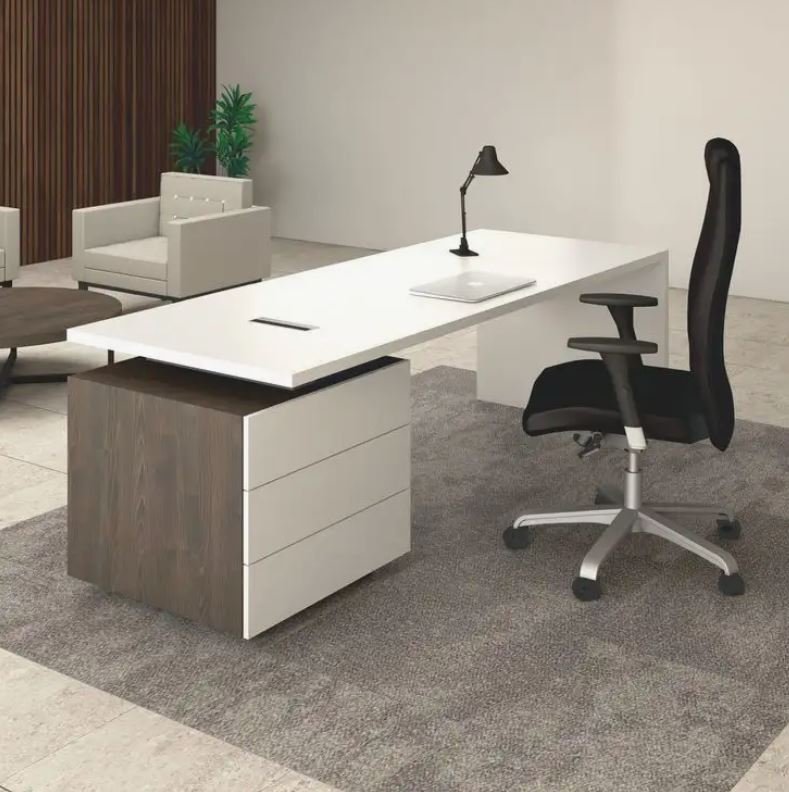
Executive office furniture creates a more formal environment for managers and business owners. A spacious executive desk paired with a comfortable chair and appropriate storage can establish a professional setting for meetings and daily administrative work.
Modular office furniture provides flexibility for businesses that expect their teams or layouts to change. Components can often be rearranged or combined according to future requirements, making modular solutions practical for growing companies.
Reception furniture is equally important because the reception area often creates the first impression of an organization. A well-designed reception counter, comfortable seating, and organized storage can make visitors feel welcome while reinforcing the company’s professional image.
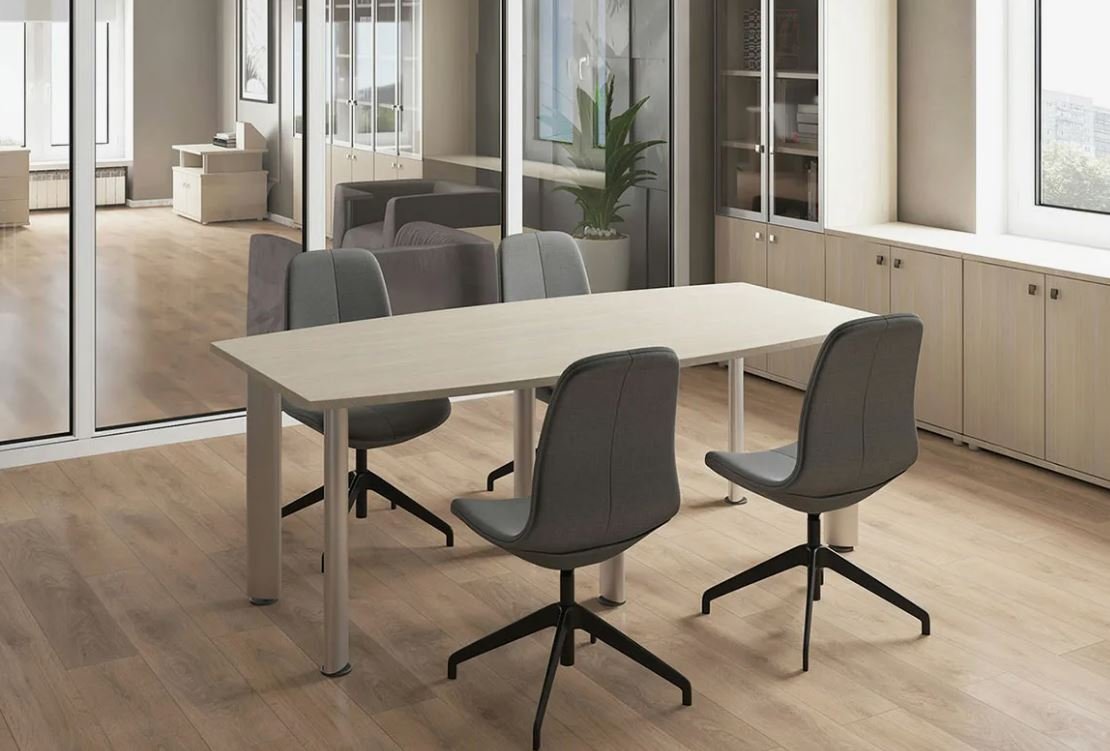
Conference room furniture should support communication. The table needs to provide enough working space for participants, while chairs should remain comfortable during longer meetings. Cable management and technology integration can also be considered during planning.
How To Choose Furniture For Different Office Spaces
Different areas of an office require different furniture solutions. Treating every room in the same way can result in wasted space or uncomfortable working conditions.
For individual work areas, desks should provide sufficient surface space for computers, Furniture Designs Philippines, and other equipment. Adjustable or ergonomic chairs can help employees maintain a comfortable working position throughout the day.
For collaborative areas, flexible tables and movable seating can make it easier for employees to work together. These spaces can also support informal meetings and short discussions.
Executive offices usually require a stronger visual presence. However, appearance should not come at the expense of functionality. Storage, cable management, comfortable seating, and sufficient workspace remain essential.
Reception areas need a balance between customer-facing presentation and practical use. The reception desk should provide enough working space while leaving comfortable circulation around the entrance.
Meeting rooms should be planned around the expected number of participants. A table that is too large can make a small meeting room feel cramped, while a table that is too small may restrict movement and working space.
Space-Saving Furniture For Manila And Quezon City Offices
Office space can be expensive and limited, particularly in busy business districts. This makes space efficiency an important consideration when choosing office furniture.
Compact desks, corner workstations, mobile pedestals, vertical storage, and modular partitions can help businesses make better use of available floor space. Instead of increasing the footprint of every workstation, companies can use smart storage and carefully planned layouts to maintain a clean working environment.
For smaller offices, furniture with multiple functions can be especially useful. A meeting table can sometimes double as a collaborative workspace, while mobile storage units can be moved when the office layout changes.
Businesses in Manila and Quezon City can also benefit from planning circulation paths before purchasing furniture. Employees and visitors should be able to move comfortably between workstations, meeting rooms, storage areas, and exits.
Ergonomics Should Be Part Of Furniture Selection
A visually attractive office is not enough if employees are uncomfortable while working. Ergonomics should be considered when selecting desks, chairs, monitor positioning, and workstation layouts.
An office chair should provide suitable back support and allow users to maintain a comfortable posture. Desk height and working surface dimensions should also be appropriate for the tasks employees perform.
Computer-based work requires particular attention to monitor placement and seating position. Employees should have enough space to position screens, keyboards, and other equipment comfortably.
Ergonomic planning can also improve the overall user experience of a workspace. When employees have furniture that supports their daily activities, the office can become easier and more comfortable to use.
Materials And Finishes Matter
The materials used in office furniture affect appearance, durability, maintenance, and overall value. Common choices include engineered wood, laminate finishes, metal components, glass, fabric, and various combinations of these materials.
Laminate surfaces are popular because they can provide a clean appearance while being relatively easy to maintain. Metal components can add structural strength, while glass may help create a lighter visual appearance in selected areas.
Color selection should also complement the office environment. Neutral finishes can create a professional appearance, while carefully selected accent colors can reinforce a company’s branding without making the workspace feel overwhelming.
When selecting furniture, businesses should consider how frequently the products will be used and how easy the surfaces are to clean and maintain. A product that looks attractive initially may not provide good value if it requires excessive maintenance.
Furniture Planning For Growing Businesses
Startups and expanding companies should think beyond their immediate furniture requirements. Employee numbers, departments, office locations, and work styles can change over time.
Modular workstations and flexible furniture can make future changes easier. Businesses may be able to reconfigure existing components instead of replacing an entire furniture setup whenever the office layout changes.
Procurement teams should also consider consistency. Purchasing furniture from different sources without a coordinated plan can lead to mismatched colors, dimensions, and finishes. A consistent furniture collection can make the entire workplace appear more organized.
Before placing a large order, businesses should evaluate measurements, workstation capacity, storage requirements, delivery considerations, installation requirements, and future expansion.
Creating A Professional Office Without Wasting Space
Good office design does not require every available area to be filled with furniture. In fact, overcrowding can make an office feel uncomfortable and reduce efficient movement.
A better approach is to identify the purpose of each zone. Workstations can support focused work, meeting areas can support collaboration, reception areas can welcome visitors, and storage zones can keep documents and supplies organized.
Furniture should then be selected according to those functions. This approach helps businesses avoid purchasing products simply because they look attractive in a showroom.
For offices serving clients, the visual character of the workspace also matters. Reception counters, executive desks, conference tables, and seating should create a consistent professional impression.
How To Compare Furniture Before Buying
Price is an important consideration, but it should not be the only factor. Businesses should compare furniture based on dimensions, materials, construction, ergonomics, warranty, expected usage, maintenance, and suitability for the intended space.
It is also useful to consider the total cost of ownership. A low-cost product that needs frequent replacement may ultimately cost more than a durable option designed for regular commercial use.
Businesses should request accurate product specifications before making purchasing decisions. Measurements are particularly important because furniture that looks suitable online may not fit the intended room once installed.
For larger office projects, requesting a quotation can also help procurement teams compare complete solutions rather than evaluating individual products separately.
Common Mistakes When Choosing Office Furniture
One common mistake is purchasing furniture before measuring the office. Even high-quality products can create problems if they restrict movement or do not fit properly.
Another mistake is prioritizing appearance over comfort. Employees may spend many hours using office chairs and desks, so functionality should remain central to the decision.
Ignoring storage is another frequent problem. Offices can quickly become cluttered when documents, supplies, equipment, and personal items do not have designated storage areas.
Businesses may also overlook future growth. Furniture that works for today’s employee count may become difficult to manage after expansion.
Finally, choosing furniture without considering the complete office layout can produce an inconsistent result. A coordinated approach generally creates a more practical and professional environment.
Why Local Furniture Expertise Can Help
Working with an office furniture supplier familiar with the Philippine market can simplify the purchasing process. Local expertise can be useful when businesses need help with furniture selection, space planning, product specifications, delivery coordination, and installation.
For companies in Manila and Quezon City, a supplier that understands local office requirements can help identify solutions appropriate for different workplace environments.
This can be especially valuable for corporate offices, schools, government facilities, hospitals, startups, and businesses completing larger fit-out projects.
Choosing Furniture For Your Business
The right office furniture should support the way your organization actually works. Start by evaluating the number of employees, available space, daily activities, storage needs, meeting requirements, preferred style, and expected future growth.
Then compare furniture options based on practical criteria rather than choosing solely by appearance or price. Consider whether each product contributes to employee comfort, efficient space utilization, organization, and the professional image of your business.
If you are planning a new workspace or upgrading an existing office, Office Furniture Express can be considered when exploring furniture solutions for professional environments. Requesting product information or a quotation can help you compare suitable options according to your space and requirements.
Frequently Asked Questions About Furniture Designs Philippines
What are the most popular office furniture designs in the Philippines?
Popular options include modular workstations, executive desks, ergonomic office chairs, conference tables, reception counters, filing cabinets, and space-saving storage solutions.
How do I choose office furniture for a small office?
Prioritize compact dimensions, efficient storage, flexible workstations, and furniture that maintains comfortable circulation throughout the office.
Is modular office furniture suitable for startups?
Yes. Modular furniture can be useful for growing businesses because layouts can be adjusted as employee numbers and workplace requirements change.
What should I consider before buying office furniture?
Consider measurements, functionality, ergonomics, materials, durability, storage, maintenance, warranty, budget, delivery, installation, and future expansion.
Which furniture is suitable for corporate offices?
Corporate offices often use coordinated workstations, executive furniture, ergonomic seating, meeting tables, reception furniture, and dedicated storage systems.
How can office furniture improve a workspace?
Well-planned furniture can improve organization, support comfortable working conditions, make better use of available space, and create a more professional workplace environment.
Should businesses visit a showroom before purchasing?
When possible, visiting a showroom allows buyers to assess furniture dimensions, finishes, comfort, construction, and overall appearance before making a larger investment.
Can office furniture be customized?
Depending on the supplier and product range, businesses may have options for different dimensions, finishes, configurations, partitions, storage arrangements, and workstation layouts.
Final Thoughts
The best Furniture Designs Philippines solutions are those that combine practical workplace requirements with a professional visual identity. Whether you are furnishing a compact startup office in Quezon City, a corporate workplace in Manila, or a larger facility, thoughtful furniture planning can make the available space more functional and comfortable.
Rather than choosing products individually, consider the complete workplace. Think about employee needs, visitor experience, storage, circulation, ergonomics, technology, future growth, and long-term value. With the right planning and furniture selection, businesses can create offices that look professional while supporting the people who use them every day.