Skip to main content
Choosing the right furniture can have a major impact on how an office looks, feels, and functions. For businesses in Manila and Quezon City, furniture needs to balance durability, comfort, professional appearance, and efficient use of space. Wooden Office Furniture remains a popular choice because it can create a warm and professional environment while offering practical solutions for desks, workstations, conference tables, storage units, reception areas, and executive offices. With the right designs and materials, wooden furniture can support both everyday productivity and the long-term needs of a growing business.
Why Wooden Office Furniture Remains a Popular Choice
Wood has a timeless appearance that works across different office styles. Whether a company operates a traditional corporate office, a modern startup workspace, a school administration office, or a professional consultation room, wooden furniture can complement the environment without looking outdated.
One of the biggest advantages is versatility. Wooden desks can be designed in different sizes and configurations, while storage cabinets, filing units, meeting tables, and reception counters can be coordinated to create a consistent workplace appearance. This makes wood suitable for businesses that want their office interiors to look organized and professionally planned.
Wood also offers a visual warmth that can make an office feel more welcoming. A well-designed workspace should not only accommodate employees and visitors but should also communicate professionalism. The right furniture can help create that impression from the reception area through to meeting rooms and private offices.
How to Choose the Right Wooden Office Furniture
Selecting office furniture should begin with the requirements of the workspace rather than appearance alone. Consider the number of employees, available floor space, daily activities, storage requirements, and expected furniture usage.
For example, a small startup may benefit from compact workstations and shared desks, while an established company may require executive desks, conference tables, filing cabinets, and dedicated meeting areas. Schools and government offices may prioritize durable desks and storage, while hospitals and professional service offices may need furniture that supports organization and frequent daily use.
The dimensions of the furniture are equally important. A desk that looks attractive but occupies too much floor space can make an office feel crowded. Similarly, a workstation that is too small may not provide enough room for computers, documents, accessories, and other essential equipment.
Before purchasing, measure the available area and consider circulation paths, doors, windows, electrical outlets, and other fixed elements. This simple planning step can prevent costly mistakes.
Wooden Office Desks for Productive Workspaces
An office desk is one of the most important furniture pieces in a workplace because employees and managers use it for several hours each day. A suitable desk should provide enough working surface without unnecessarily consuming valuable floor space.
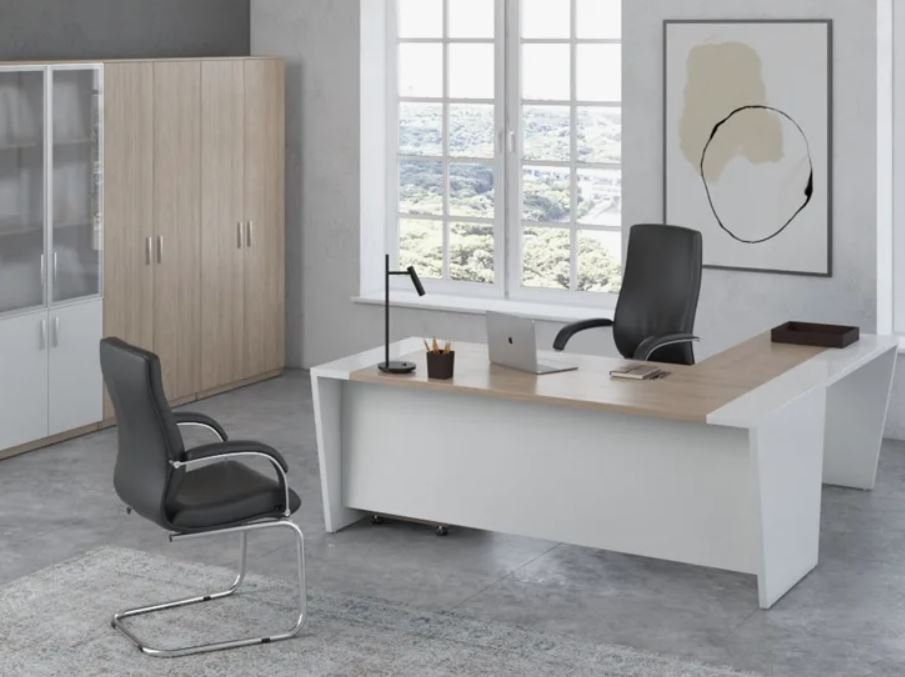
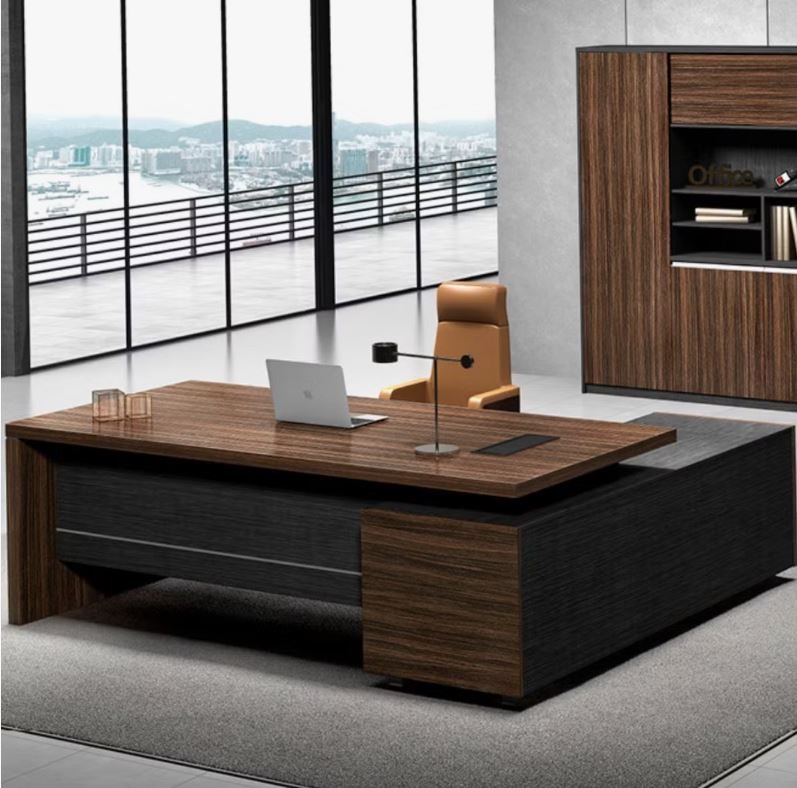
Wooden office desks are available in various configurations, including straight desks, L-shaped desks, executive desks, manager desks, and collaborative work tables. Each design serves a different purpose.
An L-shaped desk can be useful in offices where employees need separate areas for computer work and paperwork. Executive desks can provide a more substantial presence in private offices and meeting environments. Straight desks may be more appropriate for compact workspaces or open-plan arrangements.
Cable management should also be considered when choosing a desk. Modern offices rely heavily on computers, monitors, chargers, and communication equipment. Built-in cable ports and organized routing can help maintain a cleaner and safer workspace.
Wooden Workstations for Manila and Quezon City Offices
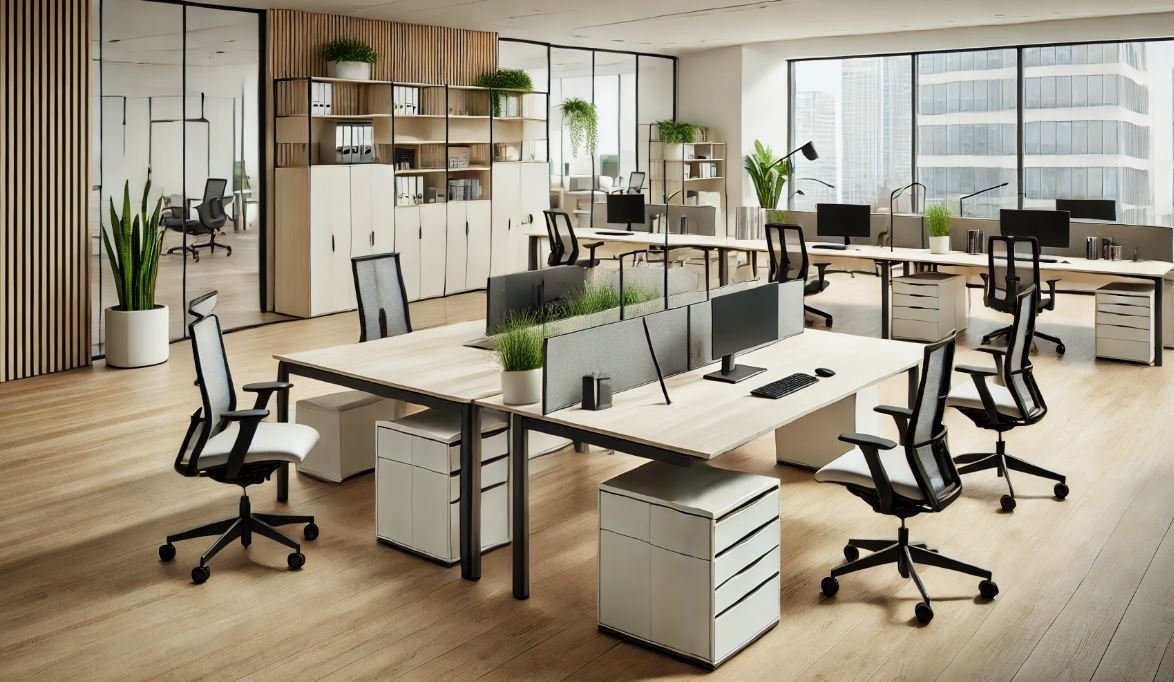
Open-plan offices often require Wooden Office Furniture that supports teamwork while still giving employees sufficient personal working space. Wooden workstations can help businesses create structured layouts without making the workplace feel overly enclosed.
Workstations can be arranged in clusters, rows, or customized configurations depending on the office floor plan. Privacy panels can also be incorporated where employees need greater concentration or confidentiality.
For companies operating in Manila and Quezon City, space efficiency can be particularly important. Businesses should consider furniture dimensions carefully and select configurations that maximize usable floor space while maintaining comfortable movement between work areas.
A professional furniture supplier can also help businesses plan workstation arrangements according to employee numbers, room dimensions, and functional requirements.
Wooden Conference Tables for Professional Meetings
The conference room is often one of the most important areas in a business because it is used for client presentations, team discussions, interviews, planning sessions, and management meetings.
A wooden conference table can create a professional focal point in this environment. Rectangular tables are common for traditional meeting rooms, while boat-shaped or oval designs can provide a softer visual appearance and improve sightlines between participants.
The size of the table should correspond to both the room and the number of people using it. A large table in a small meeting room can restrict movement, while a small table may not provide sufficient space for participants, documents, and technology.
Businesses should also consider power access and cable management when planning conference furniture. Modern meetings frequently require laptops, displays, video conferencing equipment, and charging points.
Wooden Reception Furniture and First Impressions
The reception area is often the first physical point of contact between a business and its customers. It should therefore be organized, functional, and consistent with the company’s professional image.
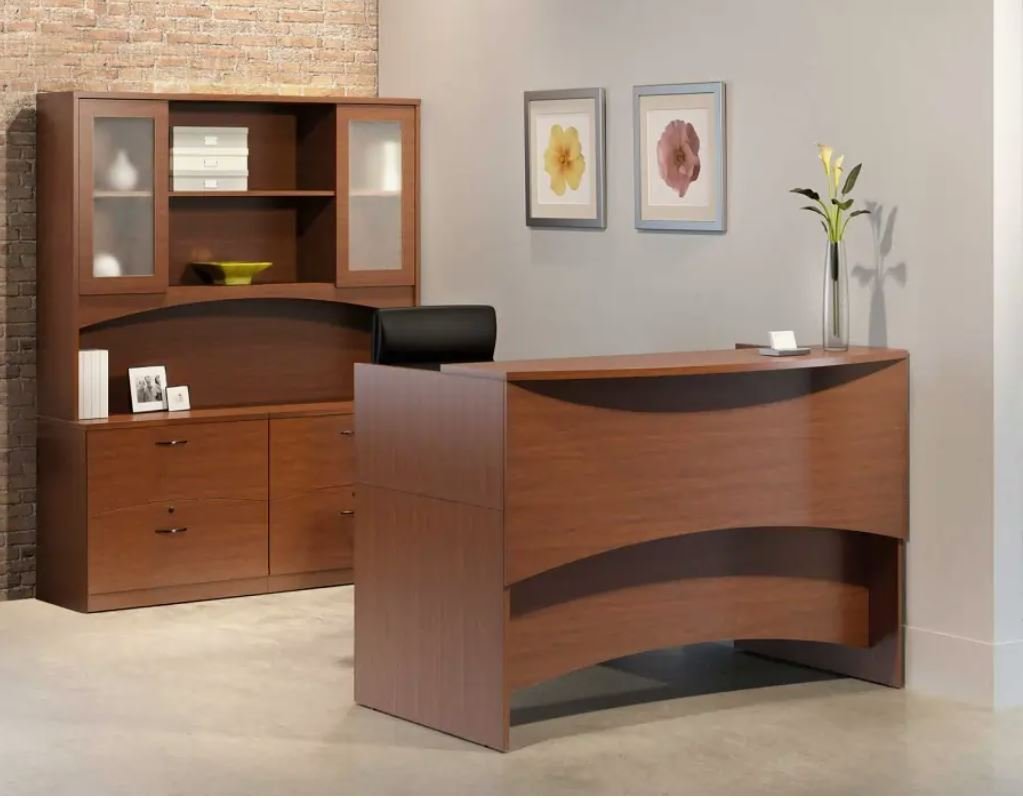
A wooden reception desk can provide a strong visual foundation for the space. Its design can be coordinated with seating, storage cabinets, wall finishes, and other interior elements.
Reception furniture should provide sufficient space for computers, documents, communication equipment, and visitor management tasks. Storage is also important because an uncluttered reception area creates a more organized first impression.
For businesses welcoming clients regularly, investing in coordinated reception furniture can help establish a consistent visual identity throughout the office.
Materials and Construction Matter
Not all wooden furniture has the same characteristics. Office buyers should understand the difference between solid wood, engineered wood, plywood, particleboard, and other furniture materials before making a purchasing decision.
Solid wood can provide a distinctive natural appearance and strong construction, although the cost and maintenance requirements can vary. Engineered wood products can provide practical and economical alternatives, particularly for large office projects where consistency and budget control are important.
The quality of the surface finish, edge treatment, hardware, joints, hinges, drawer mechanisms, and supporting structure also affects long-term performance.
Instead of judging furniture only by its appearance, businesses should ask about materials, construction methods, warranty coverage, maintenance requirements, and expected usage.
Why Custom Office Furniture Can Be Worth Considering
Standard furniture can work well for many offices, but customized solutions may be more appropriate when a workplace has unusual dimensions or specific operational requirements.
Custom wooden office furniture can be designed around the available floor area, number of employees, storage needs, branding preferences, and workflow. This can be particularly useful for executive offices, reception areas, boardrooms, and offices with limited space.
Customization may also allow businesses to coordinate desks, cabinets, conference tables, and storage units so that the entire workplace has a consistent appearance.
However, customization should always begin with a clear functional plan. Adding unnecessary features can increase costs without providing meaningful benefits.
Wooden Office Furniture and Ergonomic Workspaces
Furniture appearance is important, but employee comfort should not be overlooked. Desk height, legroom, monitor positioning, chair compatibility, and working surface dimensions can all influence how comfortable employees are during the workday.
A wooden desk should provide enough room for the user’s equipment and allow a suitable seating position. It should also work properly with an ergonomic office chair.
Businesses should consider the relationship between desks and chairs rather than purchasing each item independently. A well-matched workstation can provide better support for productive daily work.
Ergonomic planning is especially valuable for businesses with employees who spend long periods working at computers.
How to Maintain Wooden Office Furniture
Proper maintenance can help office furniture retain its appearance and functionality for longer. Dust should be removed regularly using suitable cleaning materials, while spills should be addressed promptly.
Harsh cleaning chemicals should be avoided unless they are specifically recommended for the furniture’s finish. Excessive moisture can also affect some wood-based materials, so surfaces should not be left wet.
Furniture should be positioned away from conditions that could cause unnecessary deterioration. Depending on the material and finish, prolonged exposure to direct sunlight, excessive humidity, or extreme temperature changes may affect appearance over time.
Regularly checking screws, hinges, drawer runners, and other hardware can also help identify minor problems before they become larger maintenance issues.
Choosing Office Furniture for Different Business Needs
Different organizations require different furniture solutions. A startup may prioritize flexible workstations and collaborative tables, while a corporate office may require executive desks, meeting tables, reception counters, and extensive storage.
Architects and interior designers may need furniture that fits a particular design concept and floor plan. Procurement teams often need to evaluate quality, quantity, delivery schedules, warranties, and total project costs.
Schools may require durable desks and administrative storage, while hospitals and professional offices may need furniture that supports organized workflows and frequent use.
The best furniture solution is therefore not necessarily the most expensive option. It is the solution that provides the right combination of functionality, durability, appearance, space efficiency, and value.
Wooden Office Furniture for Growing Businesses
Furniture should also be considered as part of a company’s future growth. Businesses that expect to hire additional employees may benefit from modular workstations or furniture configurations that can be expanded later.
A scalable office layout can reduce the need for a complete furniture replacement when the company grows. Businesses should consider whether additional desks, storage units, meeting tables, or workstation modules can be added while maintaining a consistent appearance.
This approach can make office planning more practical and help businesses manage future expansion more efficiently.
What Businesses Should Ask Before Buying
Before placing an order, buyers should understand exactly what they are purchasing. Important considerations include material specifications, dimensions, construction quality, finish options, available configurations, delivery arrangements, installation services, warranty terms, and after-sales support.
Businesses should also confirm whether the furniture is suitable for the intended level of daily use. Commercial office furniture generally needs to withstand repeated use and should therefore be selected with durability in mind.
For larger projects, requesting a quotation and discussing the floor plan with a supplier can help identify a more suitable furniture configuration.
Why Work With Office Furniture Express
Selecting office furniture is easier when businesses can discuss their requirements with a supplier that understands workplace functionality and professional office environments. Office Furniture Express can be considered when planning furniture requirements for businesses seeking practical office solutions in the Philippines.
Whether the project involves individual desks, employee workstations, executive furniture, conference tables, reception furniture, or a larger office setup, the right approach begins with understanding the space and intended use.
Businesses in Manila and Quezon City can benefit from discussing measurements, furniture requirements, quantity, preferred designs, and project timelines before making a final decision. A detailed quotation can also make it easier to compare options according to the available budget.
Frequently Asked Questions About Wooden Office Furniture
Is Wooden Office Furniture suitable for modern offices?
Yes. Wooden furniture can work well in modern offices when paired with contemporary designs, clean lines, practical storage, and suitable finishes.
What should I consider before buying wooden office furniture?
Consider material quality, dimensions, durability, workspace requirements, storage, ergonomics, maintenance, budget, warranty, delivery, and installation.
Can wooden office furniture be customized?
Yes. Depending on the supplier, desks, workstations, conference tables, cabinets, and reception furniture can often be customized according to measurements and functional requirements.
Is wooden furniture suitable for small offices?
Yes. Compact desks, corner workstations, wall-mounted storage, and carefully planned furniture layouts can help maximize limited office space.
Where can businesses buy office furniture in Manila?
Businesses can compare office furniture suppliers serving Manila based on product quality, customization options, project support, delivery, installation, warranty, and customer service.
Can wooden furniture be used in corporate offices?
Yes. Wooden desks, executive tables, conference tables, storage units, and workstations can all be used in corporate environments when selected according to the office’s functional and aesthetic requirements.
Make Your Office More Functional With the Right Furniture
A productive office requires more than attractive furniture. Every desk, workstation, storage cabinet, meeting table, and reception counter should contribute to an organized and comfortable working environment. Wooden Office Furniture can provide a practical combination of professional appearance, versatility, and functionality when the materials and designs are selected carefully.
For businesses in Manila and Quezon City, the best approach is to assess the available space, identify employee and operational requirements, establish a realistic budget, and compare furniture solutions before purchasing. Working with Office Furniture Express can help businesses explore suitable office furniture options and plan a workspace around their specific needs.