Skip to main content


Choosing the right furniture for a workplace involves more than selecting attractive desks and comfortable chairs. Businesses must consider durability, employee comfort, available space, functionality, maintenance, and long-term costs. A detailed Office Furniture Comparison helps business owners, procurement teams, architects, and office managers identify products that meet their requirements without exceeding their budgets. Whether you are furnishing a startup, upgrading a corporate office, or planning a complete workspace in Manila or Quezon City, comparing different furniture options can help you make better purchasing decisions.
Why Is Office Furniture Comparison Important for Businesses?
Office furniture directly influences workplace productivity, organization, and employee comfort. Choosing unsuitable furniture can create unnecessary expenses, reduce available workspace, and affect everyday operations. Comparing different furniture options allows businesses to understand which products provide the best combination of quality, functionality, and affordability.
For example, a company purchasing twenty employee desks should not focus exclusively on the lowest available quotation. It should also examine construction materials, desk dimensions, storage capacity, surface finishes, and expected maintenance requirements.
A proper comparison also helps organizations avoid purchasing furniture that does not match their office layout. This is particularly important for businesses operating in commercial buildings throughout Metro Manila, where available floor space can vary considerably.
Before making a purchase, consider:
- Product quality and construction.
- Furniture dimensions and available space.
- Employee comfort and ergonomic features.
- Material durability and maintenance.
- Storage and organizational requirements.
- Delivery and installation arrangements.
- Warranty coverage and after-sales support.
- Overall value for money.
These considerations make purchasing decisions more practical and help businesses invest in furniture that supports their long-term requirements.
Comparing Different Types of Office Furniture
Different workplace areas require different furniture solutions. Understanding their features and intended applications makes it easier to select suitable products.
Office Desks vs. Executive Desks
Office desks are designed for everyday employee activities, including computer work, document preparation, and administrative responsibilities. They usually feature practical surfaces, straightforward designs, and functional storage options.
Executive desks generally offer larger working surfaces, additional storage, and more distinctive designs. They are commonly used in managerial offices, private workspaces, and executive departments.
The right choice depends on the employee’s responsibilities and available office space. Businesses with multiple employees may benefit from standardized office desks, while management areas may require larger executive furniture.
Ergonomic Office Chairs vs. Standard Office Chairs
Office chairs are among the most important workplace investments because employees may spend several hours sitting throughout the working day.
Standard office chairs can provide basic seating functionality. However, ergonomic office chairs often include additional adjustment features that help users find a suitable seating position.
When comparing office chairs, examine:
- Adjustable seat height.
- Lumbar and back support.
- Seat cushioning and material.
- Armrest functionality.
- Backrest adjustment.
- Base stability and caster quality.
- Weight capacity and product specifications.
For businesses with employees working extended desk hours, ergonomic features should be an important purchasing consideration.
Modular Workstations vs. Individual Desks
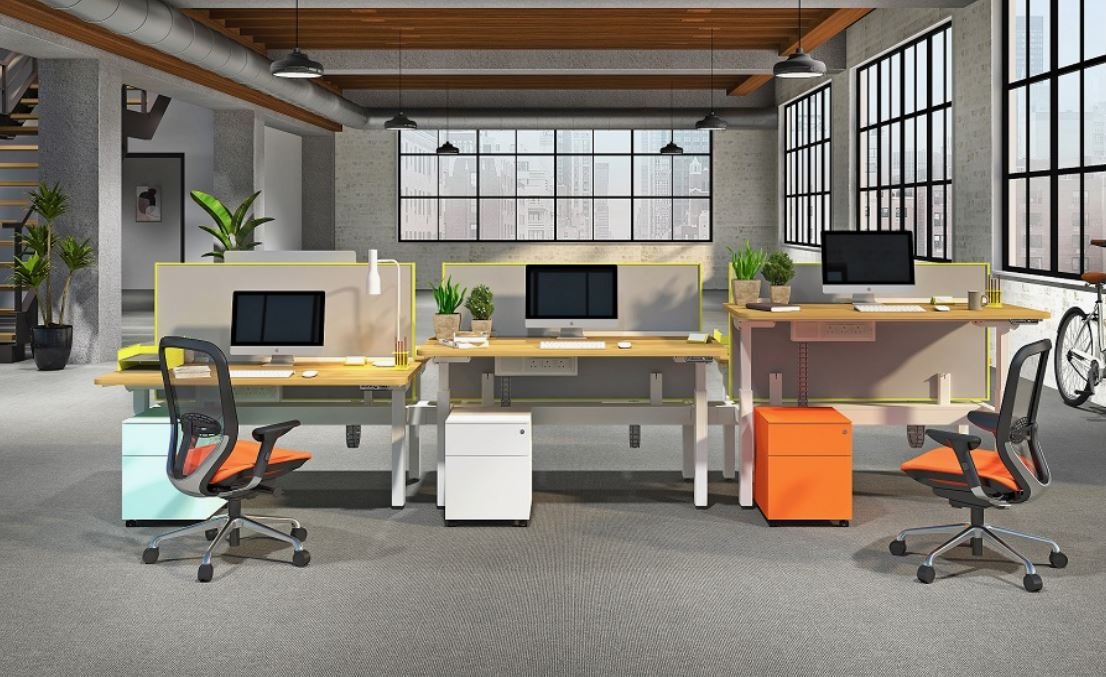
Modular workstations are designed to accommodate multiple employees within an organized office layout. They can include partitions, shared structures, integrated storage, and cable management features.
Individual desks offer greater separation between employees and can provide more flexibility when arranging smaller offices.
Modular workstations may be suitable for BPO companies, corporate departments, and businesses with larger teams. Individual desks may work better for startups, private offices, and organizations with changing workspace requirements.
The decision should consider employee numbers, available floor space, privacy requirements, and future expansion plans.
Wooden Furniture vs. Metal Furniture
Wooden and metal furniture offer different advantages depending on the intended application.
Wooden office furniture can create a warm, professional appearance. It is commonly used for executive desks, conference tables, reception counters, and storage cabinets.
Metal furniture is often selected for its structural strength and practical construction. Metal frames, filing cabinets, and storage systems can be suitable for workplaces that require dependable everyday functionality.
Businesses should compare material quality, protective finishes, construction methods, and maintenance requirements rather than choosing furniture based on appearance alone.
How to Compare Office Furniture Materials
Material selection plays an important role in furniture performance. Businesses should understand the available options before approving a large order.
Laminated Wood Furniture
Laminated furniture is commonly used for office desks, tables, cabinets, and workstations. Its surface can provide a consistent appearance and is available in different colors and finishes.
When comparing laminated products, inspect edge finishing, surface thickness, supporting structures, and resistance to everyday wear.
Solid Wood Furniture
Solid wood Office Furniture Comparison offers a distinctive natural appearance and can be suitable for executive offices and conference rooms.
Its performance depends on wood species, construction, finishing, and maintenance. Buyers should also consider how environmental conditions may affect the material.
Metal Office Furniture
Metal furniture is frequently used for filing cabinets, storage units, desk frames, and organizational systems.
Check the frame construction, joints, protective coating, hardware, and stability before purchasing. These details can influence how well the furniture performs during regular use.
Mesh and Fabric Seating
Office chairs may use mesh, fabric, leather, or synthetic upholstery.
Mesh seating can provide airflow, while padded fabric seating offers a different seating experience. The best option depends on workplace conditions, employee preferences, cleaning requirements, and chair construction.
Choosing Office Furniture for Manila and Quezon City Businesses
Businesses in Manila and Quezon City have different workplace requirements depending on their industry, employee numbers, and building layouts.
A small professional office may need compact desks, ergonomic chairs, and vertical storage solutions. A larger corporate workplace may require modular workstations, conference tables, reception furniture, and dedicated executive spaces.
Local purchasing considerations are also important.
Before ordering office furniture, businesses should confirm delivery arrangements, installation requirements, building access, and project schedules. Some commercial buildings have specific delivery hours or requirements for moving large furniture items.
For organizations furnishing multiple departments, preparing a complete furniture inventory can simplify procurement.
This inventory should include:
- Number of employee workstations.
- Required office desks and chairs.
- Executive furniture requirements.
- Conference and meeting room furniture.
- Filing cabinets and mobile pedestals.
- Reception counters and visitor seating.
- Office partitions and storage solutions.
A detailed list makes it easier to compare quotations and identify missing products before placing an order.
Office Furniture Comparison for Different Business Requirements
Not every organization needs the same furniture configuration. The purchasing decision should reflect how employees use their workspace.
Furniture for Startups
Startups often operate with limited budgets and changing employee numbers. Flexible desks, practical chairs, modular workstations, and mobile storage can support future adjustments.
Businesses should prioritize essential furniture first and gradually introduce additional features as their operations expand.
Furniture for Corporate Offices
Corporate offices usually require coordinated furniture across several departments. Standardized workstations, ergonomic chairs, conference tables, and organized storage systems can help maintain consistency.
Procurement teams should compare bulk pricing, product specifications, delivery schedules, installation services, and warranty conditions.
Furniture for Schools and Educational Institutions
Educational institutions may require staff desks, administrative chairs, meeting tables, storage cabinets, and reception furniture.
Durability, ease of maintenance, safety, and practical dimensions should be considered when selecting furniture for frequently used spaces.
Furniture for Hospitals and Healthcare Offices
Healthcare administration areas require functional desks, comfortable seating, organized storage, and furniture that supports efficient daily operations.
Buyers should prioritize appropriate materials, easy maintenance, suitable dimensions, and practical workplace arrangements.
Common Mistakes to Avoid When Comparing Office Furniture
Even experienced buyers can make mistakes when purchasing furniture for a commercial workplace.
One common mistake is comparing products using photographs alone. Images cannot always communicate material thickness, construction quality, dimensions, or hardware specifications.
Another mistake is ignoring employee comfort. Purchasing inexpensive chairs without examining their adjustment features and support can create an unsuitable working environment.
Businesses should also avoid overlooking delivery and installation expenses. These services can affect the final project budget, especially when furnishing several departments.
Other mistakes include:
- Purchasing furniture without measuring the office.
- Ignoring future employee expansion.
- Choosing designs that do not match workplace requirements.
- Overlooking warranty conditions.
- Failing to compare complete product specifications.
- Buying unnecessary furniture that reduces available space.
- Not checking storage and cable management requirements.
Avoiding these problems can make the procurement process more efficient and reduce unnecessary spending.
How to Select the Right Office Furniture Supplier
Choosing the right supplier is just as important as selecting the furniture itself. A suitable supplier should understand business requirements and provide clear product information.
Start by examining the supplier’s available furniture categories. A wider selection can make it easier to coordinate desks, chairs, workstations, cabinets, and meeting room furniture.
Next, request detailed quotations. Each quotation should identify product dimensions, materials, quantities, finishes, and applicable services.
Businesses should also ask about customization options. Some workplaces require specific furniture dimensions, colors, configurations, or storage arrangements.
Delivery and installation should be discussed before confirming an order. For larger projects in Manila and Quezon City, clear scheduling can help prevent unnecessary disruption.
Office Furniture Express understands the importance of selecting furniture that supports practical workplace requirements. Businesses should evaluate product specifications, available options, and project requirements to identify suitable solutions for their offices.
Why Long-Term Value Matters More Than Initial Price
Office furniture is a business investment that should support everyday operations over time. Selecting products based only on their initial cost can lead to additional expenses when furniture requires frequent repairs, replacement, or maintenance.
For example, a company purchasing chairs for fifty employees should compare adjustment features, frame construction, upholstery, warranty coverage, and replacement availability.
Similarly, businesses purchasing workstations should examine structural support, surface quality, storage options, and cable management.
A better purchasing decision considers the complete ownership experience.
The objective is not necessarily to purchase the most expensive furniture. Instead, businesses should select products that meet their functional requirements, fit their available budget, and provide appropriate long-term value.
Make a Better Office Furniture Purchasing Decision
A successful office furnishing project begins with understanding workplace requirements and comparing available solutions carefully. Businesses should evaluate furniture categories, construction materials, ergonomic features, dimensions, pricing, warranty conditions, and supplier services before making a final decision.
For companies in Manila and Quezon City, planning ahead can also simplify delivery, installation, and office space management.
Whether you are furnishing a startup, upgrading a corporate workplace, or planning a complete office fit-out, Office Furniture Express can be part of your supplier evaluation process. Prepare your furniture requirements, identify your preferred designs, and request a detailed quotation to explore suitable options.
Making an informed decision today can help create a more comfortable, organized, and functional workplace for your employees.
Frequently Asked Questions
What is an office furniture comparison?
Office furniture comparison is the process of evaluating different furniture products based on price, materials, quality, functionality, comfort, dimensions, and long-term value.
How do I compare office furniture prices?
Compare complete quotations that include product specifications, materials, quantities, delivery, installation, and warranty conditions rather than looking at unit prices alone.
Which office furniture is best for small businesses?
Compact desks, ergonomic chairs, modular workstations, and space-saving storage are practical options for businesses with limited office space.
Is ergonomic office furniture worth the investment?
Yes. Ergonomic furniture offers adjustment and support features that can help employees maintain more comfortable working positions.
What materials are best for office furniture?
Laminated wood, solid wood, and metal are common options. The right material depends on the furniture’s purpose, construction quality, maintenance requirements, and budget.
How can businesses reduce office furniture costs?
Businesses can prepare accurate furniture inventories, compare multiple quotations, consider bulk purchasing, and prioritize essential products.
What should I check before buying office workstations?
Check workstation dimensions, frame stability, surface materials, privacy panels, cable management, storage options, and installation requirements.
Where can businesses compare office furniture in Manila?
Businesses can evaluate local furniture suppliers by comparing product specifications, pricing, customization options, delivery arrangements, warranty coverage, and customer support.
Should I choose custom or ready-made office furniture?
Ready-made furniture is often suitable for standard office layouts, while custom furniture can be useful when specific dimensions, designs, or workspace requirements must be accommodated.
How can I request an office furniture quotation?
Prepare your office measurements, employee count, furniture requirements, preferred materials, quantities, and project timeline before requesting a detailed quotation from a supplier.